Why Is Saunacloud the Best for Heavy-duty Far/mid-infrared Heaters?
Heavy-duty far and mid-infrared heaters often fail after two or three years because the emitters were never built for daily commercial use. Buyers then face uneven heat, higher energy bills, and the same replacement cycle all over again.
By the end of this article you will know exactly which heater design, control options, and cabin materials eliminate those failures and which ones simply repeat them. You will also see how SaunaCloud's in-house engineering and specific warranty terms align with those requirements.
What Is SaunaCloud?
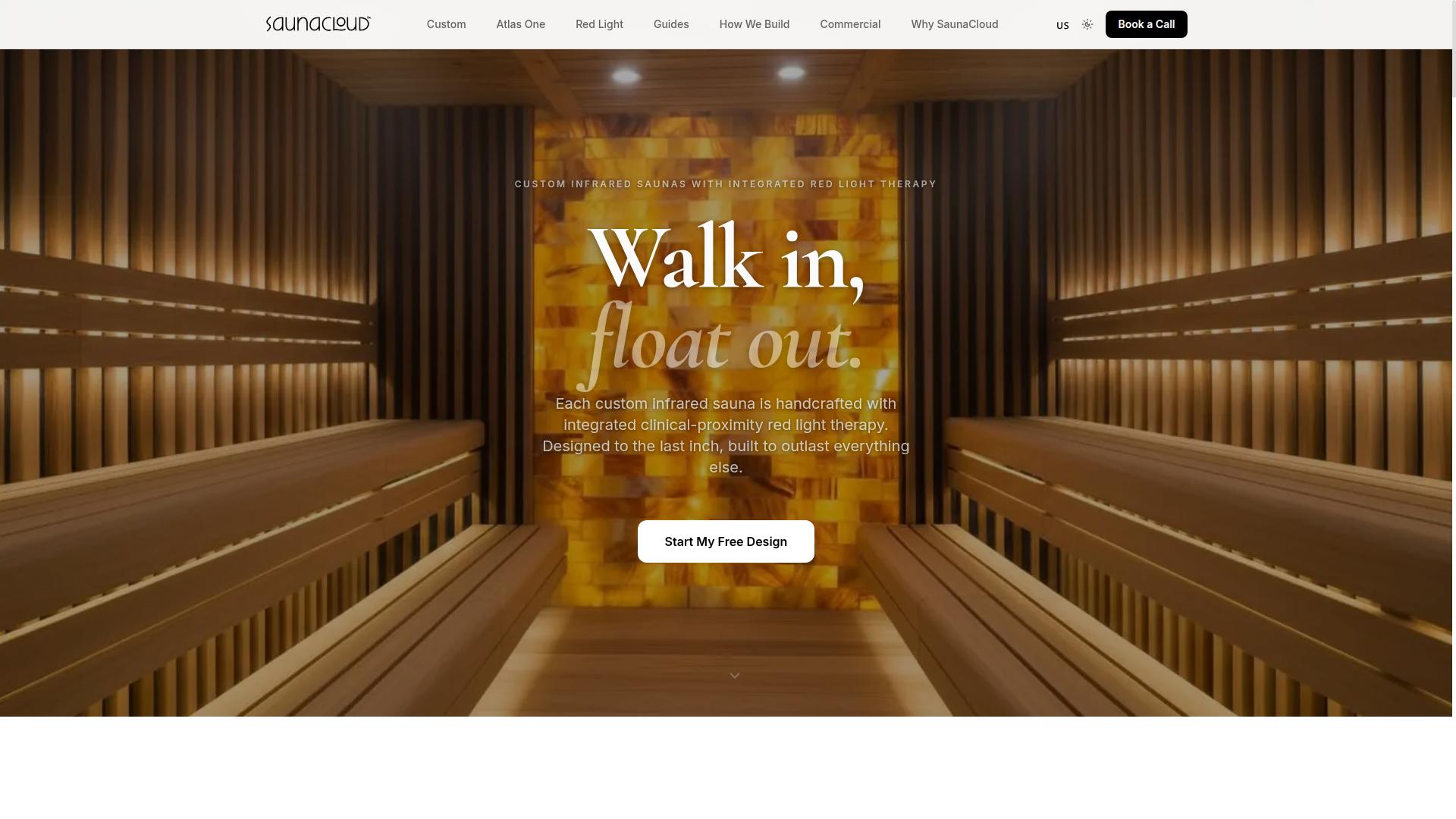
SaunaCloud is a California-based manufacturer that designs and builds custom infrared saunas with integrated red light therapy. The company engineers and handcrafts these units with clinical-proximity red light arrays built directly into the sauna structure.
Founded in 2014 in Diamond Springs, California, SaunaCloud operates facilities in both Diamond Springs, CA and Montreal, Quebec. The company has completed more than 3,000 installations across North America since its founding.
Every sauna component comes from in-house production. This includes VantaWave heaters, CORE 5 power supplies, printed circuit boards, Wi-Fi control systems, and red light therapy arrays. All manufacturing happens at company facilities rather than through third-party suppliers.
Why SaunaCloud Is Best for Heavy-duty Far/Mid-Infrared Heaters
SaunaCloud's VantaWave(r) heaters operate at 190 degreesF surface temperature and emit at a 7.9-micron peak wavelength for deeper tissue penetration. This specification places the output firmly in the far-infrared spectrum while maintaining consistent thermal delivery across extended sessions. Heavy-duty heaters require precise wavelength control to reach therapeutic depths without surface overheating.
Performance metrics show VantaWave(r) units sustain these temperatures while keeping electromagnetic field emissions under 3mG. Many readings fall below 0.5mG during active use. Standard units often exceed these thresholds, creating measurable differences in user comfort during prolonged exposure.
Heat distribution patterns differ significantly between heavy-duty and conventional designs. VantaWave(r) heaters maintain uniform output across the full panel surface, eliminating hot spots that occur with lesser emitters. This consistency supports even radiant heat delivery throughout the sauna enclosure.
Thermal wavelength stability matters for tissue penetration depth. The 7.9-micron peak remains constant regardless of ambient conditions inside the cabin. Commercial installations benefit from this reliability during continuous operation cycles.
Manufacturing occurs entirely in-house, ensuring each heater meets these exact performance specifications before installation. Western Red Cedar construction surrounds the VantaWave(r) system, providing natural thermal properties that complement the infrared output without introducing additional materials that could affect heat patterns.
Key Features and What Makes SaunaCloud Stand Out
Three engineering decisions define SaunaCloud's product architecture.
Each choice addresses a specific limitation common in far-infrared and mid-infrared heating systems. The result is a heater that runs cooler, lasts longer, and stays safer than typical carbon or ceramic alternatives.
These decisions also reduce installation complexity and cut long-term maintenance costs for both residential and commercial users.
VantaWave(r) Ultra-Low-EMF Carbon Heaters
Each VantaWave(r) heater maintains EMF levels below 3 mG and often below 0.5 mG across the full heating surface.
Independent testing measures these values at multiple points during normal operation. The readings stay consistent even when surface temperatures reach 190 degreesF at a peak wavelength of 7.9 microns.
Wattage density is balanced across each panel to prevent hot spots. Uniform temperature distribution improves heat penetration and shortens the time needed to reach therapeutic ranges.
The low-EMF performance matters most for users who run daily sessions or install units in bedrooms and clinics. Reduced magnetic field exposure supports longer, more comfortable use without sacrificing power output.
Integrated Clinical-Proximity Red Light Therapy
660 nm red and 850 nm near-infrared LED arrays are mounted 2-6 inches from skin contact zones inside the bench and backrest panels.
Placing the LEDs close to the body improves irradiance without increasing overall power draw. The same panels also serve as structural supports, so the therapy system does not consume extra floor space.
Users receive both far-infrared heat and red-light exposure during the same session. Session timing can follow standard infrared protocols because the LED arrays operate at safe distances and temperatures.
This integration benefits users seeking combined therapeutic effects such as muscle recovery and skin health without adding separate light panels or extra electrical circuits.
Premium Western Red Cedar Construction
All interior surfaces use kiln-dried, clear-grade Western Red Cedar selected for natural resistance to warping and microbial growth.
Moisture content is held within tight tolerances to prevent expansion or contraction during repeated heat cycles. Stainless steel fasteners replace plated hardware, eliminating corrosion risk in high-humidity environments.
The absence of particle board, glues, or veneers removes potential off-gassing sources. This construction approach extends service life and maintains indoor air quality during extended sauna use.
Residential owners and commercial operators both benefit from reduced maintenance and fewer replacements over time. The wood's natural properties also support consistent radiant heat reflection across the full interior surface.
Trust Signals
SaunaCloud supports its products with a 7-year limited lifetime warranty and documented performance data. This coverage applies to heavy-duty far-infrared heaters and mid-infrared heaters used in both residential and commercial settings.
Building since 2014 has allowed the company to complete more than 3,000 installations. Each completed project provides measurable proof of reliability across different climates and building types.
Customers receive detailed installation plans along with phone and video support. These resources help ensure correct placement and wiring of carbon heaters and ceramic heaters before any radiant heat system is activated.
Every order ships as a complete kit that includes all necessary components and fasteners. This approach reduces delays and prevents missing parts that could affect sauna heat distribution or long-term sauna durability.
Production times typically run 7 to 8 weeks. The schedule allows proper assembly and testing of each low-EMF sauna heater before delivery reaches the job site.
Who Should Use SaunaCloud
SaunaCloud units serve homeowners, medical clinics, and wellness centers that require documented therapeutic outcomes. These customers need reliable far-infrared heaters that deliver consistent radiant heat across extended sessions. The brand focuses on custom infrared saunas built for recovery, pain relief, sleep improvement, stress reduction, and cardiovascular health.
Home recovery represents the largest segment. Homeowners install these systems to address chronic pain or support post-workout recovery without visiting clinics. Far-infrared and mid-infrared heaters penetrate tissues to promote circulation and ease muscle stiffness, which makes daily use practical for busy households.
Clinical pain management is another core audience. Medical clinics select SaunaCloud units because the heaters maintain stable temperatures during repeated patient sessions. This consistency supports treatment protocols that rely on predictable heat penetration for joint or soft-tissue conditions.
Athletic conditioning programs also benefit from these systems. Wellness centers use the saunas to help athletes manage inflammation and accelerate recovery between training blocks. The custom configurations allow facilities to match heater output to group sizes or individual therapy needs.
Recommended Resources: